
A hot drink on a cool morning and a cold drink on a warm afternoon seem to ask for opposite things. Yet a vacuum flask can help with both using the same idea: slow the transfer of heat. Its most interesting feature is not an extra ingredient, but a space with very little in it.
In a vacuum flask, the gap between the inner and outer walls has most of its air removed. With very few particles in that gap, heat has fewer opportunities to travel across it by conduction or convection. Reflective surfaces can also reduce heat transfer by radiation, while the stopper limits another route in or out.
The flask does not decide whether your drink ought to be hot or cold. It slows heat moving between the contents and their surroundings. That is why the same general design can help a warm drink lose heat more slowly and a cool drink gain it more slowly. It is an everyday object with a clever use for almost-empty space.
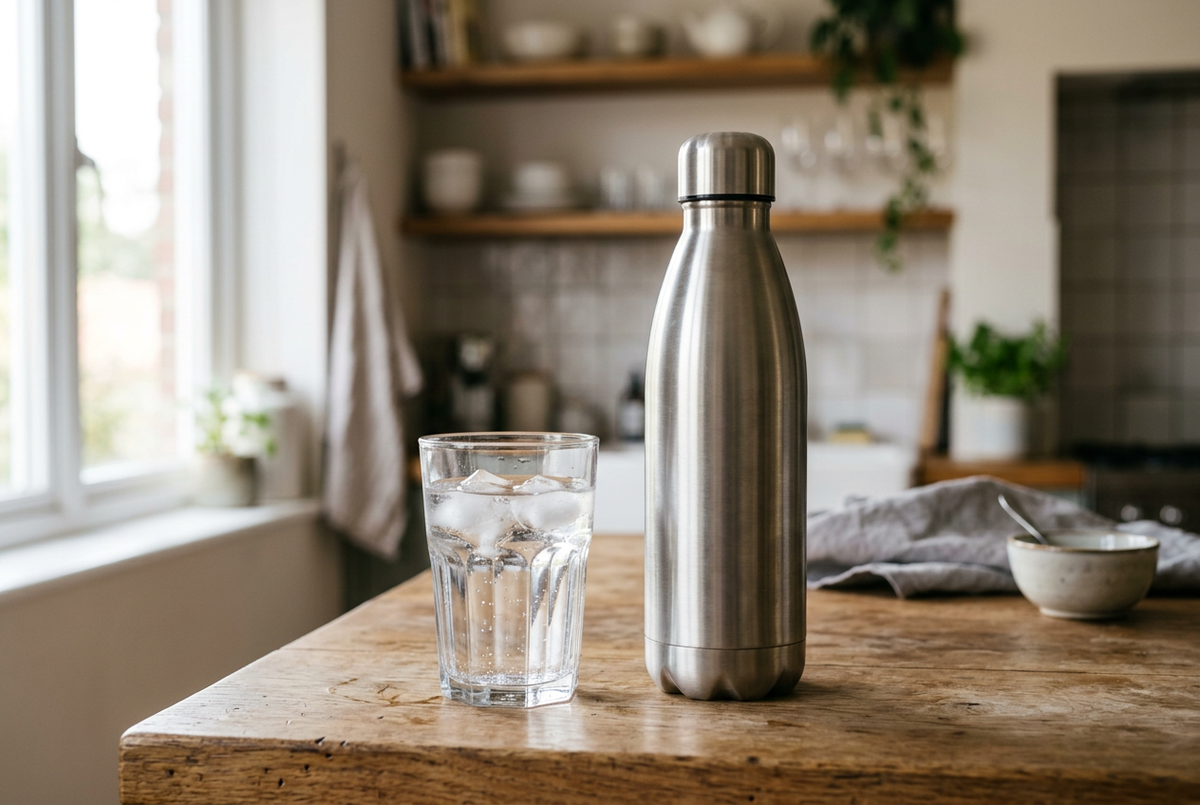
For a different drinkware idea, explore the 40 oz Holiday Tumbler with Handle at OLMStore Finds. This story explains vacuum flasks generally, not the construction or temperature performance of that tumbler; follow the listing and supplied beverage-care guidance for the actual item. Source: University of Sydney’s thermos flask explanation. The featured flask image is illustrative, not the linked tumbler.