
Fun Fact of the Day: Tartan Has a Repeating Recipe
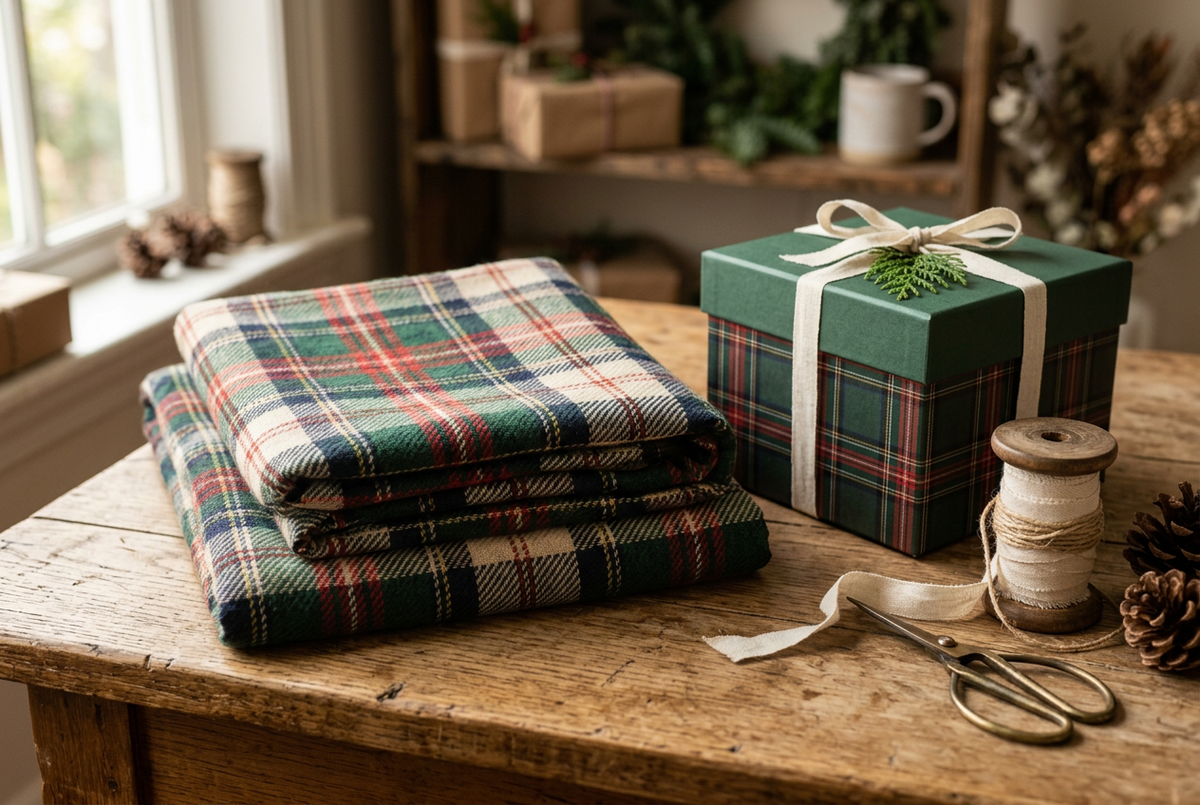
A tartan pattern might look like a playful mix of stripes, but behind that colorful grid is something surprisingly precise: a repeating recipe. Each band of color has a place in the sequence, giving the design its familiar rhythm. What feels decorative at first glance is also wonderfully orderly.
That repeating pattern is called a “sett.” In traditional tartan, a sequence of colored threads runs lengthwise through the fabric and is repeated across its width. As the threads cross, they build the recognizable arrangement of squares and lines. Think of it as a recipe defined by its colors, their order, and the number of threads used for each stripe.
The clever part happens at those intersections. Where threads of the same color cross, the color looks solid. Where different colors cross, they create a mixed visual effect. A relatively small selection of thread colors can therefore produce a pattern that looks much richer and more intricate.
Once you know the idea, plaid-inspired designs become even more fun to notice, from cozy fabrics to festive gift boxes. Printed plaid packaging does not have the woven construction of traditional tartan, but it borrows that satisfying rhythm of crossing stripes. For your next gift, try pairing a patterned box with a simple ribbon and a handwritten note, letting the pattern do the decorating.
At OLMStore Finds, we love discovering the stories behind familiar everyday details. Today’s fun fact is a lovely example: a beautifully intricate design can begin with a simple rule, repeated with care.
Source: Scottish Register of Tartans, https://www.tartanregister.gov.uk/FAQ